

The hidden costs of outdated mortality data
Discover the financial and operational risks of outdated mortality data and how real-time verification solutions like VitalAudit® can transform your organization.

Data drives decision making in the financial services industry and leaders at pension funds, banks, insurance companies, and government agencies use mortality data to inform processes, payments, and other business operations. Yet, many remain unaware of the substantial financial and operational risks of using outdated or inaccurate information about deceased individuals.
The problem's true scale
Recent analyses of the Limited Access Death Master File (LADMF) reveal data quality issues that should concern any organization depending solely on this resource.
In March 2025 alone, the LADMF reported several unprecedented spikes in mortality data (Table 1):
- March 9: 950,404 deaths reported (87.4% born before 1900)
- March 16: 2,510,452 deaths reported (87.3% born before 1900)
- March 23: 3,831,268 deaths reported (87.4% born before 1900)
- March 30: 2,971,813 deaths reported (90.1% born before 1900)
In April 2025, the sharp uptick in reported deaths continued with 875,152 deaths reported on April 13th, 136,548 deaths reported on April 24th, and 141,290 deaths reported on April 25th.
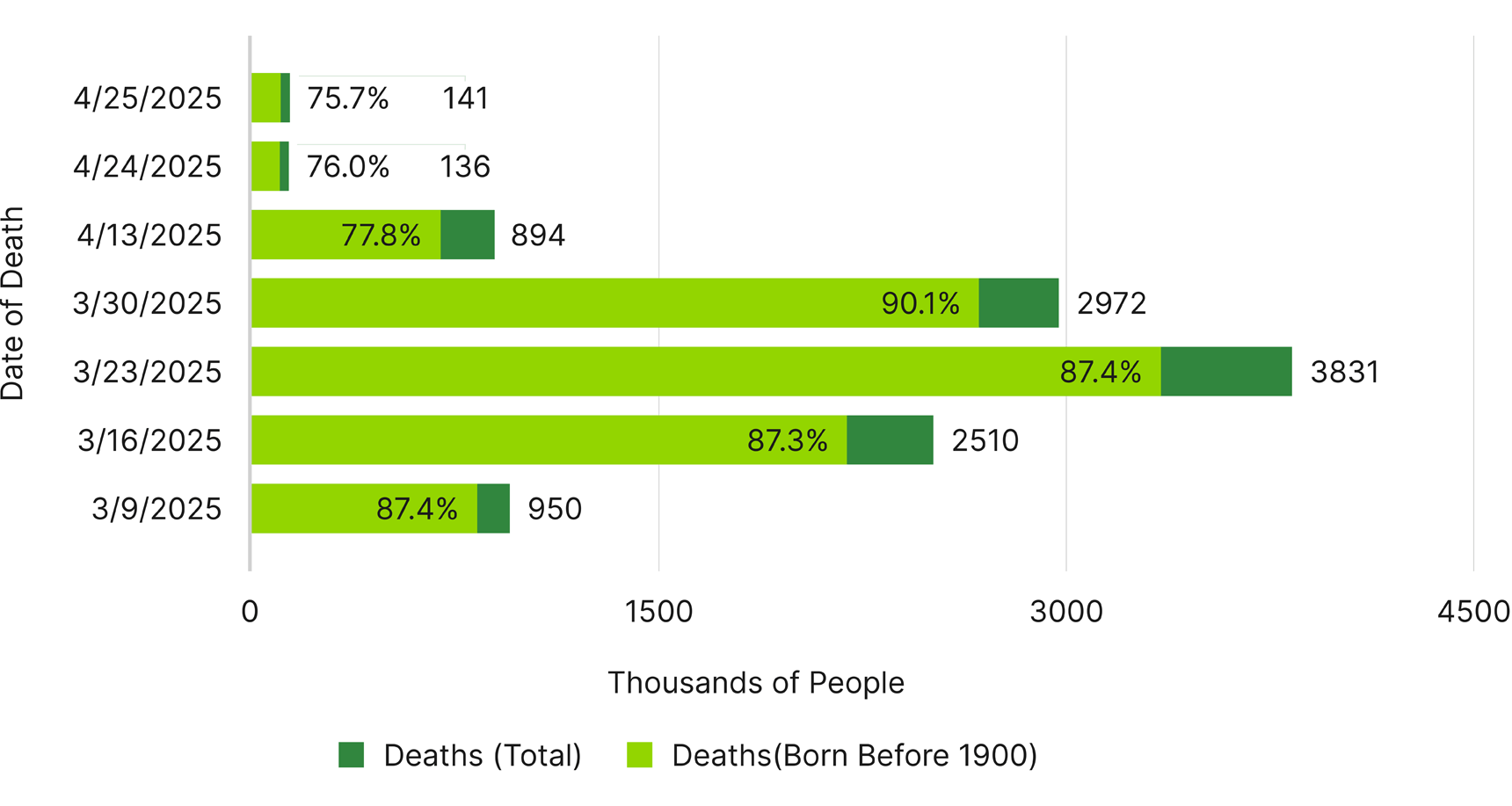
Table 1: LADMF: Total deaths vs. deaths (born before 1900). 1
These numbers don't represent actual mortality events, but rather administrative backlogs and data cleanup efforts. For context, the LADMF averaged just 11,000 new records per week before March—meaning these spikes represent a hundreds-fold increase over baseline volumes.
The March data set also reveals some anomalies in age profiles of reported deaths (Table 2):
- More than 75% of these records list birth dates before 1900
- 20-25% list birth dates between 1900 and 1905
- Less than 1% of birth dates fall outside of those years
For reference, individuals born before 1900 typically represent less than 0.01% of weekly records prior to March 2025.
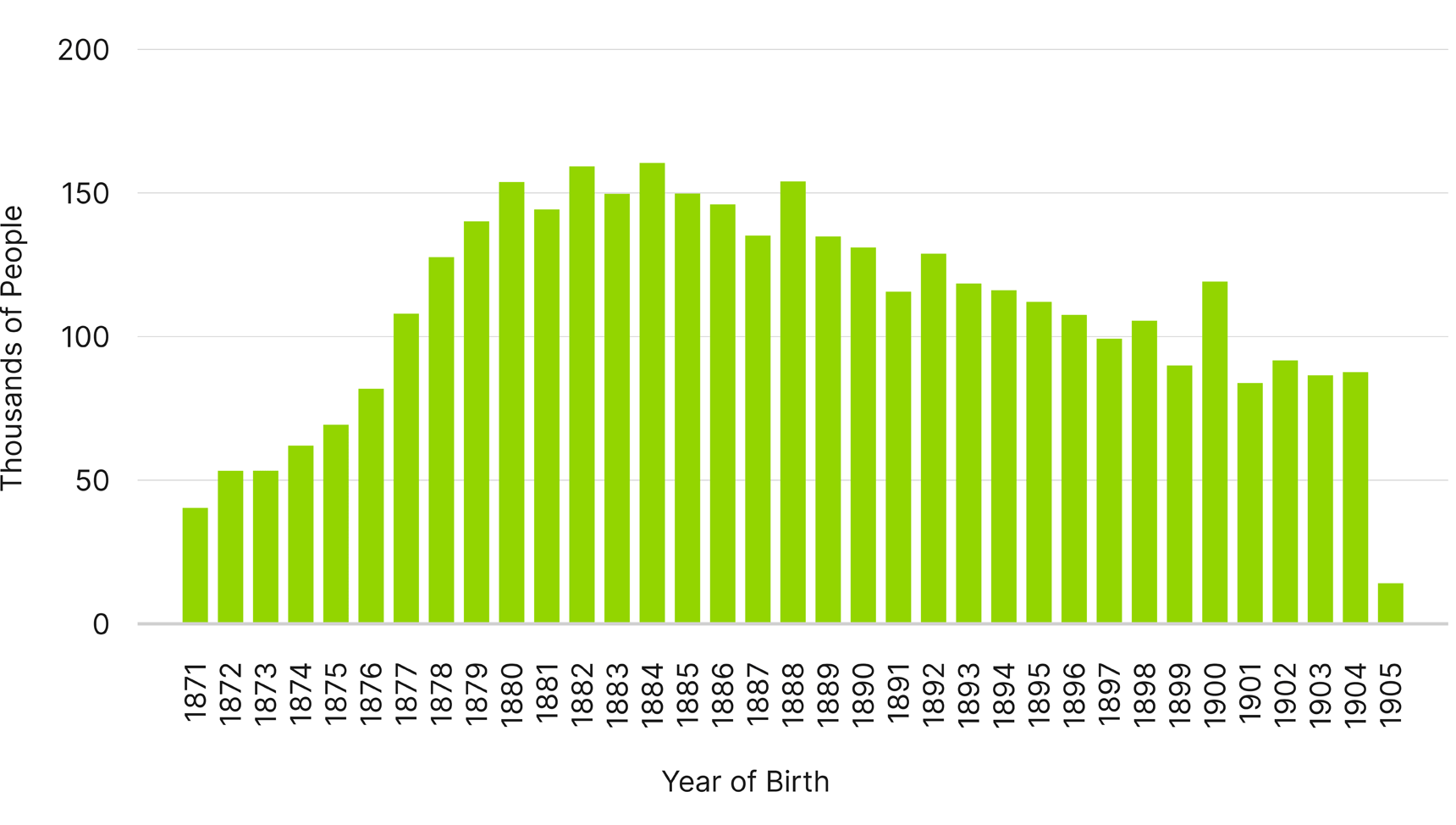
Table 2: LADMF: March 23rd deaths, reported on March 28th. 2
The SSA notes that its overall death data is “highly accurate” with error rates under 0.33%, but analysts warn that even a tiny error rate on millions of records can mask substantial operational and financial risks.
The financial impact of inaccurate mortality data
The consequences of relying on flawed mortality data extend far beyond statistical anomalies:
1. Improper payments
The U.S. government loses an estimated $1 billion annually through improper payments to deceased individuals. For private organizations, the financial exposure can be just as large:
- Pension plans continuing payments to deceased or missing participants
- Insurance companies delaying legitimate claims or paying fraudulent ones
- Managed care providers billing for services to deceased patients
- Financial institutions maintaining or escheating dormant accounts that could be transferred or distributed to next-of-kin
2. Operational inefficiencies
Outdated mortality information creates significant internal inefficiencies:
- Employee time wasted investigating false positives or negatives
- Resources diverted to remediate data issues retroactively
- Increased call center volume from confused beneficiaries
- Duplicate efforts across departments trying to verify the same information
3. Reputational damage
Something that can be difficult to quantify—but can be equally as impactful—is the reputational damage caused by using inaccurate mortality data:
- Families receiving communications addressed to deceased loved ones
- Beneficiaries who face delays receiving entitled benefits
- Media coverage of systemic failures in mortality verification
- Eroded brand trust and customer confidence
Why single-source verification falls short
The recent LADMF data anomalies demonstrate why relying on a single source of mortality information is inherently risky. The March and April 2025 backlog release introduced several critical issues:
- Known living additions: The addition of living people to the LADMF leads to significant downstream impacts and exposures.
- Proxy date problems: Death dates were populated with the date that records were added to the system rather than actual dates of death.
- Inconsistent explanations: The National Technical Information Service (NTIS), the agency behind distributing the LADMF, did not fully explain the discrepancies in the record timing and volumes.
- Questionable data quality: The concentration of deaths among people born before 1900 calls into question the reliability of the dataset.
For organizations that rely solely on LADMF data for compliance programs or payment decisions, these issues can create blind spots that compromise even the most robust processes. Industry experts advocate that organizations not rely exclusively on the LADMF. Instead, they recommend multi-source, real-time mortality verification as a strategic priority. Supplemental checks—for example, using commercial death indexes or state records – can catch anomalies that a single-file update might miss.
The transformative power of real-time verification
Guidehouse experts work with forward-thinking organizations to address these challenges by leveraging tens of thousands of state, federal, and private data sources to cross-validate mortality in near real-time. The combination of increased coverage and speed of reporting translates to greater accuracy and measurable savings by stopping improper payments and mitigating fraud. Additionally, matching algorithms capable of accommodating data variations, such as nicknames, phonetic variations, misspellings, and transposed characters reduces manual review and increases match confidence. In the end, organizations gain transparency and an ability to make informed decisions based on verified mortality data.
Moving beyond legacy approaches
For organizations still relying exclusively on single-source mortality verification, the recent LADMF anomalies serve as a stark reminder of the hidden costs of outdated approaches. The path forward requires:
- Evaluating current mortality verification processes to identify gaps and vulnerabilities
- Implementing multi-source verification to improve coverage and accuracy
- Establishing ongoing monitoring instead of one-time checks
- Integrating mortality verification into broader risk management frameworks
Turning compliance burdens into strategic advantages
As organizations face growing pressure to manage costs, comply more quickly with regulations, and deliver exceptional customer experiences, accurate mortality verification has become increasingly crucial. The financial and operational impacts of outdated systems are too significant to overlook.
By using comprehensive, multi-source mortality verification solutions such as VitalAudit®, organizations can turn a compliance burden into a strategic advantage. This approach reduces costs, improves operational efficiency, enhances compliance, and ultimately provides better experiences for customers and their beneficiaries.
Choosing between a single, flawed data source and a robust, multi-source verification solution is becoming increasingly clear. In an era where data quality drives business outcomes, accurate mortality information is not just a compliance checkbox—it's a competitive necessity.

1. National Technology Information Service, https://dmf.ntis.gov/
2. ibid.